This guide supports clearer conversation; it is not medical advice or a guarantee of safety. A severe allergy requires an individual plan developed with a qualified clinician, appropriate medication and a realistic decision about whether a kitchen can control the risk.
Translate the ingredient, not only the identity
Broad dietary labels travel imperfectly. “Vegetarian” may be understood as no visible meat while stock, animal fat or fish remains possible. “No dairy” can be confused with no milk as a drink while butter, ghee, cheese or yoghurt is overlooked. Write the exact ingredients in clear Arabic, have the translation checked by a fluent speaker, and keep the English beside it.
For an allergy, include the consequence in plain language. The purpose is not drama; it tells staff that removing a garnish is different from preventing contact.
Show the statement before ordering, ask which simple dishes can meet it, and repeat the chosen dish. A long list delivered during a rush is harder to verify.
Ask about the hidden stage
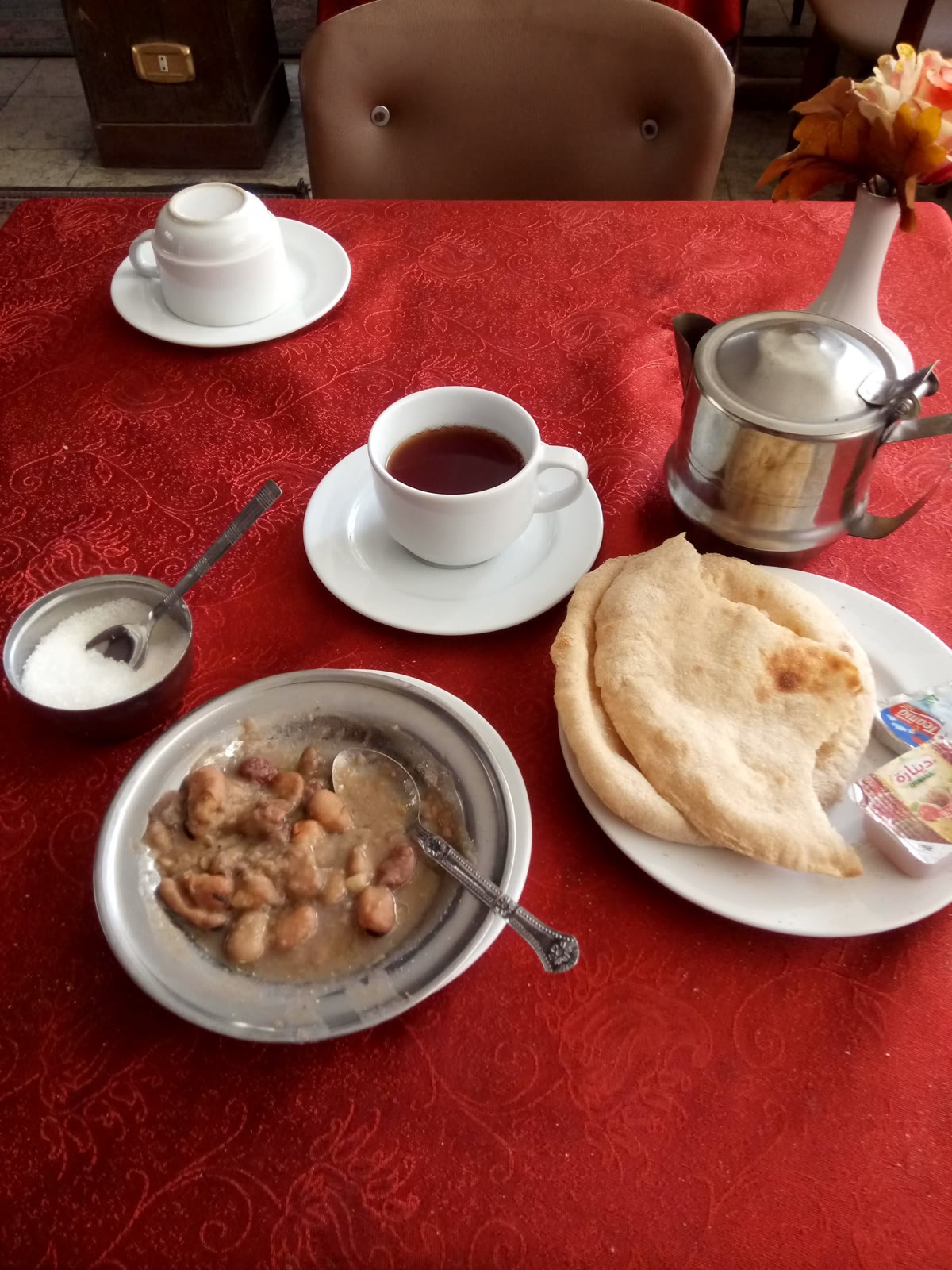
Ingredients enter through stock, marinade, sauce, garnish and frying oil. Cross-contact can occur through a shared fryer, grill, knife, blender, counter or serving spoon. Ask about the stage relevant to the food. For taameya, shared frying oil may matter. For fish, shellfish on the same grill may matter. For a breakfast spread, sesame in tahina and dairy in cheese are visible, but bread and packaged sauces still need their own check.
“It is probably fine” is not a useful answer for a severe allergy. If staff cannot confirm the process, thank them and choose another option. Hospitality should not be turned into pressure to promise certainty.
| Need | Ask about | Do not assume |
|---|---|---|
| Vegetarian | Stock, fat, meat and fish | Vegetable name means meat-free |
| Dairy-free | Milk, butter, ghee, cheese, yoghurt | No visible cheese is sufficient |
| Gluten avoidance | Wheat, bread, pasta, shared surfaces | Rice dish is automatically safe |
| Allergy | Ingredient plus cross-contact | Small amount is harmless |
Choose simplicity over optimisation
A short ingredient list is easier to discuss than a mixed platter. Sealed packaged food can provide a label, though labels still require careful reading. Carry a practical backup for transit days and remote trips. The goal is not to sample every famous food; it is to eat without turning each meal into avoidable risk.
Keep prescribed emergency medication accessible, not in checked luggage or a distant hotel room, and know the local emergency plan. Seek professional guidance before travel for any condition requiring special management.
Keep the conversation respectful
Ask before the order is prepared, avoid blaming staff for uncertainty, and pay for food already made if the requirement was introduced too late. A clear refusal is safer than false confidence. Good communication leaves both diner and kitchen able to make an honest decision.
Next craftRead the café before taking the table→