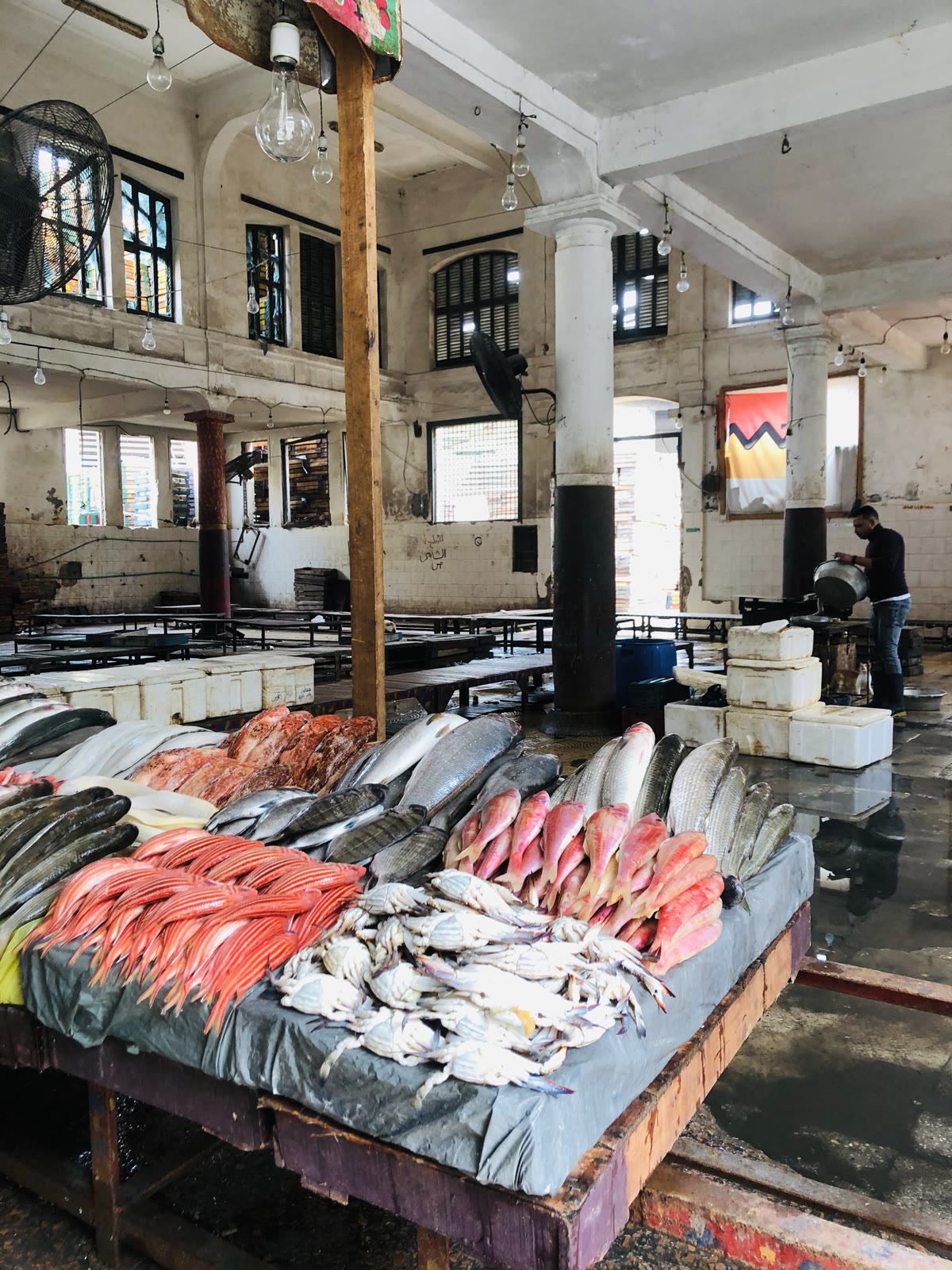
Alexandria’s Mediterranean identity is easy to romanticise through a plate of grilled fish. The more useful experience begins earlier, at the display or ordering counter. Fish may be selected by type and size, weighed, cleaned and sent for a chosen preparation. A diner who asks only for “a seafood meal” misses both the market logic and the points where misunderstandings occur.
Identify before comparing price
Local names do not always map neatly onto a familiar English common name. Even English fish names can cover several species. Ask the seller to point to the exact fish and repeat the local name. If species matters for allergy, sustainability or preference, a visual guess is not enough; choose a place able to answer clearly.
Freshness cannot be certified from an online checklist, and a photograph records only one moment. Clean display, cold holding, smell, staff practice and turnover are relevant observations. If the conditions create doubt, leave without turning the market into a confrontation.
Point to the selected fish, confirm the price per kilogram or stated unit, see the weight, and ask whether cleaning or cooking adds a separate charge.
Make the weight visible
A price displayed per kilogram is not the final price of an individual fish until it is weighed. Whole fish also includes parts that may not be served after cleaning. Ask whether the charged weight is before or after cleaning and whether the scale is visible. The goal is shared understanding, not a performance of suspicion.
For a group, ask how many fish or what total weight the staff suggests, then compare it with the other dishes ordered. Coastal meals can expand quickly when appetisers, rice, salad, bread and drinks arrive automatically or semi-automatically.
Choose a preparation that suits the fish
Grilling can emphasise skin, smoke and firm flesh. Frying creates a crisp exterior and may suit smaller fish. Oven cooking can involve seasoning, vegetables or sauce. These descriptions are tendencies, not rules. Ask what the shop commonly recommends for the selected fish and decide whether you want that house style.
Clarify whole versus filleted, especially when bones are a concern. A grilled whole fish contains bones even if it is opened flat. Children and diners unfamiliar with the fish should eat slowly and with good light.
| Decision | Confirm | Common ambiguity |
|---|---|---|
| Fish | Exact specimen and local name | Generic “seafood” label |
| Weight | Unit, scale and charged stage | Price mistaken for final total |
| Method | Grill, fry, oven; whole or cut | House method assumed |
| Additions | Sides, cooking fee and drinks | Extras treated as included |
Let side dishes explain the region
Fish rarely arrives conceptually alone. Rice, tahina, salads, pickles and bread change the meal. Seasoning and rice styles may reflect the restaurant more than an entire city, so describe the plate precisely instead of declaring every spice “Alexandrian.”
Serve yourself manageable portions from shared dishes. Whole fish cools as it waits, while a crowded table makes bones and serving utensils harder to manage. One clearly ordered main can be more satisfying than an excessive display assembled for a photograph.
Ask about shellfish and cross-contact
A fish-focused kitchen may also handle shrimp, crab, squid or molluscs. Someone with a shellfish allergy cannot infer safety from ordering fin fish. Shared fryers, grills, tools and surfaces may create cross-contact. The same applies in reverse for a fish allergy. Seek direct confirmation, and if the answer is uncertain, do not rely on reassurance without process detail.
Close the order with one total
Before cooking begins, repeat the fish, weight, method, sides and expected total or pricing basis. Keep the tone calm and the number visible. This protects both diner and staff from discovering incompatible assumptions after the food is prepared.
A good Alexandria fish meal connects sea, display, kitchen and table. Its pleasure does not depend on finding a secret restaurant. It depends on seeing the whole chain and ordering it clearly.
Apply the methodOrder with dietary needs made explicit→