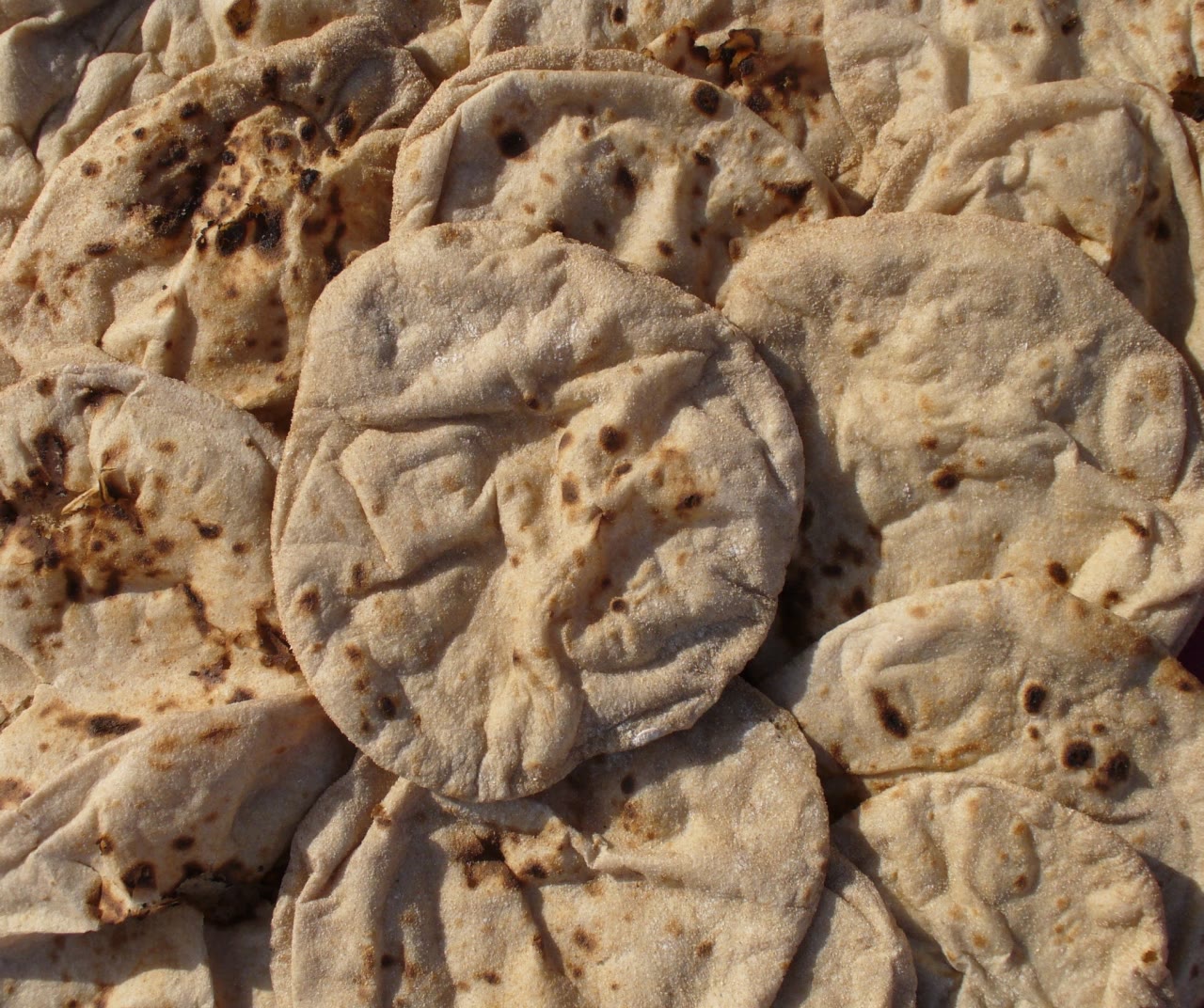
The word aish is commonly used for bread in Egyptian Arabic and also carries the meaning of life or living. That linguistic overlap is often quoted because it feels poetic, but its value is practical: bread belongs to the structure of ordinary eating. Removing it from the table may change how beans, cheese, salad or stewed vegetables are portioned and combined.
Begin with the shape, not a timeline
Aish baladi is a round, pocket-forming flatbread, commonly made from wheat flour and baked at high heat. Surface flour or bran can remain visible. The loaf may puff, separate internally and collapse into two connected layers. That structure makes it different from a thin, single-sheet flatbread, even when both are casually described as pita in English.
There is no need to force one unbroken origin story from ancient loaves to the bread in a modern bakery. Grain, milling, ovens, state policy, urban supply and household preferences have all changed. Continuity matters, but so does adaptation. Describe the loaf in front of you before calling it timeless.
Tear one small piece and watch whether it is opened into a pocket, folded around food or used as a scoop. The action explains more than a translated menu label.
Freshness changes the job
A warm loaf can be soft, fragrant and easy to split. As it cools or dries, its surface and flexibility change. That does not automatically make it unusable: bread may still accompany sauced dishes, be warmed again or find another household use. Waste and reuse are part of the bread system, though practices differ.
If bread arrives in a shared basket, take what you can reasonably eat. Tearing is normal, but avoid handling multiple loaves before choosing one. In a street setting, watch how the vendor packages and counts the bread rather than assuming a basket is self-service.
Understand the subsidised layer carefully
Bread has a major social and political role in Egypt, and subsidised baladi bread is part of a public food-support system. A visitor should not confuse every baladi loaf with the same purchasing channel or price. Commercial bakeries, restaurants and subsidised outlets are different contexts. Fixed prices can change and should be sourced from current official information, not repeated from an old article.
The point is not to turn lunch into an economic lecture. It is to recognise why bread supply and quality carry significance beyond preference. Jokes about a cheap loaf or surprise that bread is treated seriously can miss that context.
| Action | What the bread does | Watch for |
|---|---|---|
| Open | Creates a pocket for fillings | Steam-separated inner layers |
| Fold | Holds food without splitting fully | Freshness and flexibility |
| Scoop | Moves beans, dips or stew | Shared-dish etiquette |
| Separate | Keeps small foods distinct | How the table combines bites |
Read the shared plate
Bread often mediates between individual and shared food. Use a clean piece for each scoop and follow the rhythm of the people actually sharing the table. The exact etiquette can vary by household and setting. A formal meal, a street breakfast and a family table are not governed by one theatrical rule.
When invited, waiting a moment is useful. Notice how bread is distributed and whether dishes are individual or common. Hospitality does not require the guest to imitate every gesture perfectly; attention and restraint matter more.
Ask a better bakery question
Instead of asking where to find the most authentic bread, ask when a bakery’s current batch is usually ready, which flour or style it sells, and whether the queue serves a subsidised or commercial channel. Do not block the line for a long explanation. Bread work is fast, hot and repetitive.
The strongest bread note is small: the sound of loaves being stacked, the warm surface, the pocket opening, and the way one torn piece connects several dishes. That is enough context for one meal.
Next noteFul and taameya: a flexible morning system→