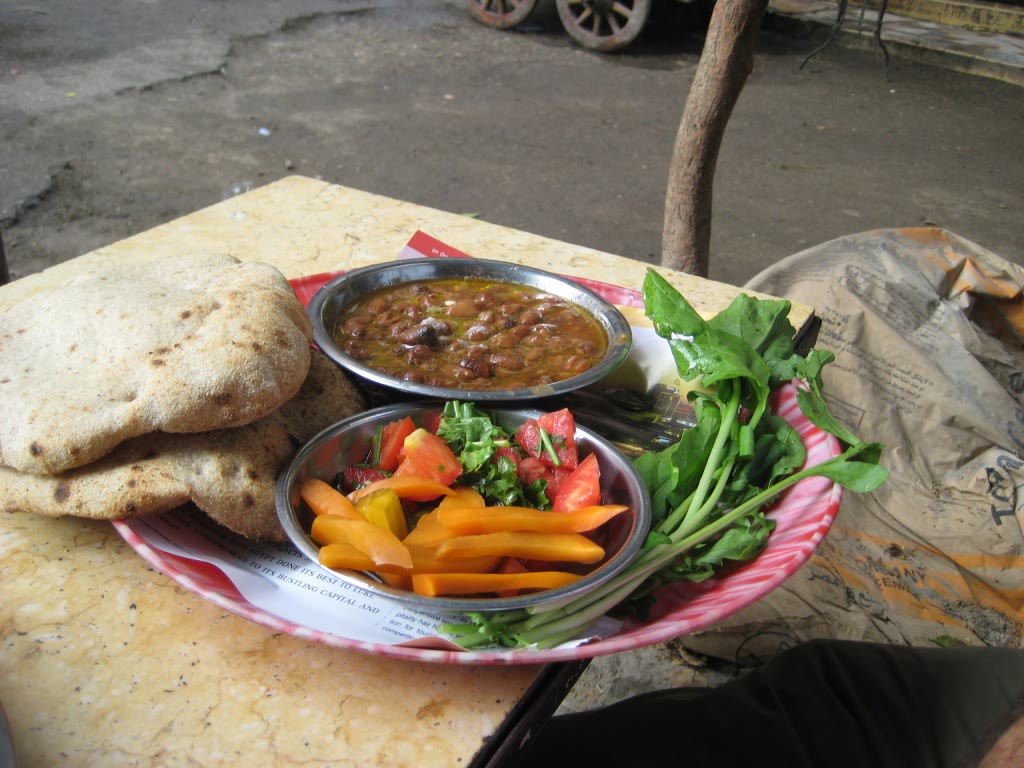
Ful medames is commonly described as stewed fava beans, but that translation leaves the diner without the most useful details. Beans may remain visibly whole or be partly crushed. Seasoning can be restrained or assertive. Oil, cumin, lemon, chilli, tomato and other additions may be mixed in, offered separately or absent. The dish is stable enough to recognise and flexible enough to resist one definitive bowl.
Separate the base from the finish
Slow cooking softens the fava beans and creates the foundation. At service, texture can be adjusted and seasonings added. Notice whether the bowl tastes primarily of the bean, cumin, acid, chilli or oil. None of these observations establishes a universal style; it tells you how this vendor or household finished this portion.
Ful can be eaten from a bowl or placed in bread. A sandwich changes the proportion of bean to garnish and makes the meal portable. A seated spread allows each diner to combine bread, vegetables, pickles, cheese or egg differently.
Taste a small amount before adding chilli or extra acid. The bowl may already be seasoned, and the table additions are part of the choice rather than mandatory decoration.
Know what makes Egyptian taameya distinct
Taameya is Egypt’s familiar form of falafel and is typically based on split fava beans rather than the chickpea base common in several neighbouring traditions. Herbs contribute a green interior, while frying creates a deeply crisp shell. Sesame may appear on the exterior, but recipes and shop methods vary.
The colour contrast matters because it records process. The interior mixture contains bean and herbs; the brown exterior has met hot oil. A taameya that has waited will lose some crispness, so timing changes the experience. This is why a busy breakfast counter may produce a particularly clear contrast between hot fritter and cool additions.
Build the bite in layers
Bread connects ful and taameya but does not make them interchangeable. Ful supplies softness and moisture. Taameya supplies crunch and herb. Pickles add acid and salt; tomato or cucumber adds fresh water and texture; tahina adds richness and sesame. A diner can combine them or keep each bite distinct.
The same spread can therefore serve different appetites without becoming a formal tasting menu. Start small. An extra sandwich is easier to request than an overloaded table is to finish. At a street counter, the components may be compressed into a portable sandwich; at a seated table, they can remain separate for a slower shared breakfast.
| Component | Main contribution | Useful question |
|---|---|---|
| Ful | Warm, soft bean foundation | Whole, mashed, mild or spicy? |
| Taameya | Crisp shell, herb-rich centre | Fresh from frying? |
| Baladi bread | Pocket, scoop and proportion | Shared basket or individual? |
| Pickle / salad | Acid, salt, freshness | Mixed in or added by diner? |
Do not assume “plant-based” resolves everything
Ful and taameya can be made from plant ingredients, but a specific order may include egg, dairy, sesame, shared frying oil or another ingredient important to the diner. Recipe tradition is not a substitute for asking the actual kitchen. A severe allergy also raises cross-contact questions that a broad vegetarian label cannot answer.
Use a short translated statement naming the ingredient and consequence. Ask once, clearly, at a time when staff can answer. If the response is uncertain, choose a simpler item or a setting with better ingredient control rather than pressuring someone to guarantee what they cannot verify.
Respect the breakfast counter
Busy breakfast service has its own rhythm. Decide whether you want bowls, sandwiches or both, state the quantity, and move aside when the order is understood. Photograph food after receiving it, not while blocking a fryer or queue. Ask before including staff in the image.
The enduring lesson of ful and taameya is flexibility. One bean becomes a slow-cooked bowl and a green fried fritter; bread and small additions make the breakfast personal. The plate does not need to be called definitive to be deeply Egyptian.
Next noteKoshari: the bowl is assembled in layers→