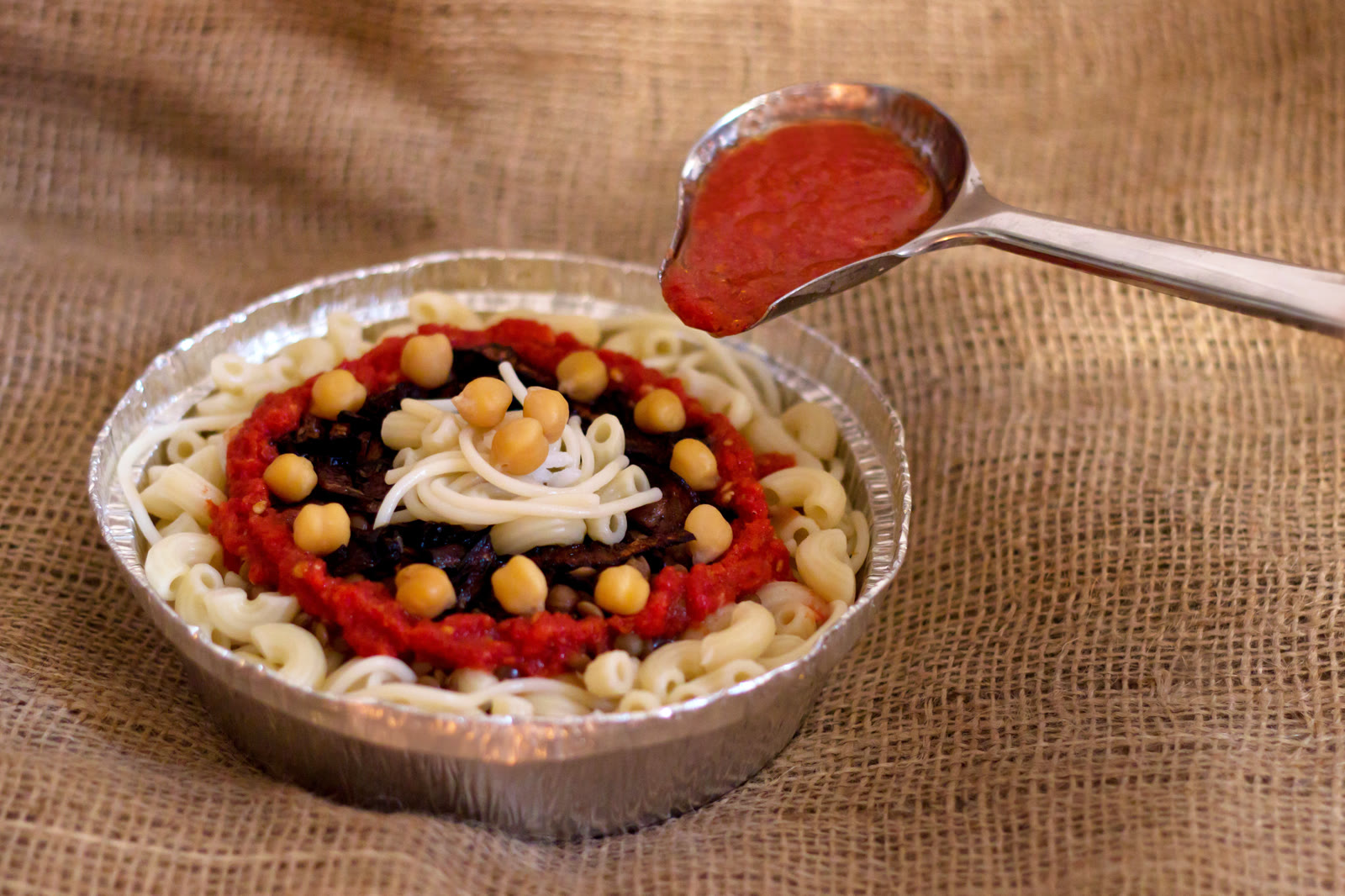
Koshari is often introduced as a surprising mixture of carbohydrates: rice, pasta and sometimes vermicelli in one bowl. That description makes the dish sound accidental. The better starting point is organisation. Lentils, grain, pasta, chickpeas, tomato sauce and fried onions are handled as separate components, then combined quickly in a service sequence. Repetition makes a busy koshari counter fast without making the food simple.
Watch the counter as a system
At a specialist shop, ingredients may sit in distinct containers within reach of the server. A bowl moves through them in a consistent order. The exact composition and proportions vary, but the logic is visible: dry foundations first, sauces and toppings later. This keeps crisp onion from disappearing into the pot and allows the diner to decide how wet, sharp or hot the final bowl becomes.
The sounds matter too—metal spoon against container, bowl on counter, onions scattered at the end. Observe without leaning over the work area or filming staff at close range without permission.
Taste one bite before adding the table sauces. Then add acid or chilli to one side, so the difference remains clear instead of changing the entire bowl at once.
Separate foundation from contrast
Rice and lentils provide a substantial base. Pasta adds another shape and chew rather than merely more bulk. Chickpeas remain whole and create visible points of texture. Tomato sauce contributes moisture, acidity and spice. Fried onions bring sweetness, bitterness and crunch.
The garlic-vinegar dressing often called daqqa sharpens the bowl; chilli sauce adds heat. Names, intensity and recipes differ by shop. A bottle’s colour is not a reliable measure of heat. Ask or test cautiously.
Mixing is a choice, not a rule
Some diners mix thoroughly; others preserve zones and adjust bite by bite. There is no need to perform a supposed authentic technique. The bowl is designed to tolerate personal finishing. What matters is not wasting a large serving after flooding it with a sauce you have not tasted.
Order size also matters. Koshari is dense, and the visual difference between sizes may be greater than expected. Start with the smaller option when uncertain. Extra sauce can usually be added; excess food cannot be returned to the service line.
Takeaway changes the timing. Steam trapped in a closed container softens fried onion, while sauce added too early moves through every layer. Keeping onion or sauce separate can preserve more contrast on a longer journey.
| Layer | Contribution | What weakens it |
|---|---|---|
| Rice and lentil | Earthy, substantial base | Overcooking into one paste |
| Pasta | Shape and chew | Long holding in sauce |
| Tomato sauce | Moisture and acidity | Masking every dry texture |
| Fried onion | Sweet-bitter crunch | Adding too early |
Read the dish without inventing a single origin
Koshari reflects ingredients and techniques with histories extending beyond Egypt, but the modern assembled dish is strongly associated with Egyptian urban food culture. Origin stories that assign it to one army, one colonial moment or one foreign dish can become cleaner than the evidence. Foods emerge through adaptation, trade, migration, affordability and repeated local practice.
It is enough to say that koshari’s ingredients have varied histories and that Egyptian cooks and shops made their assembly into a recognisable, widely available meal. Complexity does not require a myth.
Ask about dietary detail
A basic bowl may appear vegan, yet stock, frying oil, packaged pasta, garnish or cross-contact can matter. Wheat is present in ordinary pasta, and fried onions may share preparation space with other foods. Severe allergies require direct confirmation from the actual shop; an online ingredient list is not a guarantee for the current batch.
Koshari rewards attention to sequence. The dish begins as separate stores of texture and ends as a bowl the diner controls. Its everyday brilliance is operational: inexpensive components become contrast through preparation and timing.
In a busy room, return shared sauce bottles cleanly, keep the queue moving, and photograph your own bowl rather than the hands of a worker assembling dozens of meals.
Next noteAlexandria fish: ordering starts before cooking→